
Replacing existing worktops
Many customers already have good quality kitchen units and simply want to update their kitchen with new worktops, doors and handles. Replacing older worktops with new quartz, granite or porcelain surfaces can completely refresh the look of a kitchen without the need for a full replacement.
In many cases, existing worktops can be replaced with minimal disruption. Your current worktops, sink, tap and hob can usually remain in place when we template, helping to keep your kitchen usable for as long as possible before installation.
If you require your old worktops to be removed, along with the disconnection and re-connection of services such as the sink, tap and gas or electric hob, we can provide details of a tradesperson who offers this service. You would contact them directly to confirm what is required, agree the price and arrange payment directly with them.
You are also welcome to use your own plumber, joiner or tradesperson, or arrange the removal and disconnection work yourself if preferred. This part of the project is separate from the supply and installation of your new stone worktops.
When replacing existing worktops, there are a few important things to consider:
Keeping existing tiles
Keeping existing tiles
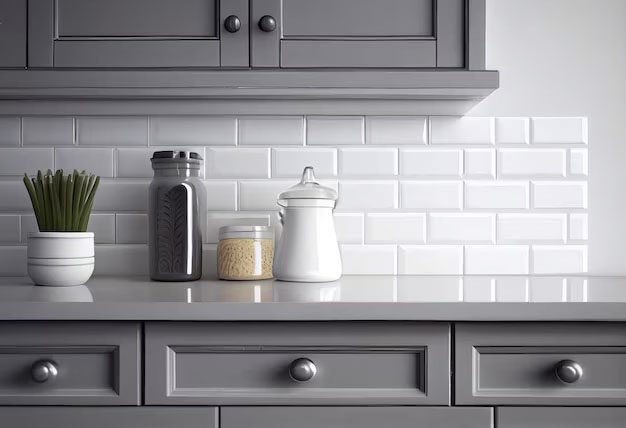
Standard Formica or wood worktops are usually around 38mm to 40mm thickness . The thickest, solid worktops we can supply are 30mm. Usually this isn’t an issue but if you have existing tiles that you want to keep, this would result in a gap of 8 to 10mm, between the new worktops and the existing tile line.
There are a couple of easy solutions to this issue. Either fit a sub top to lift the new worktops up to the existing tile height or up-stands, a boarder of quartz / granite strips around the back of the worktops that would hide the gap .
Adding a Sub-top
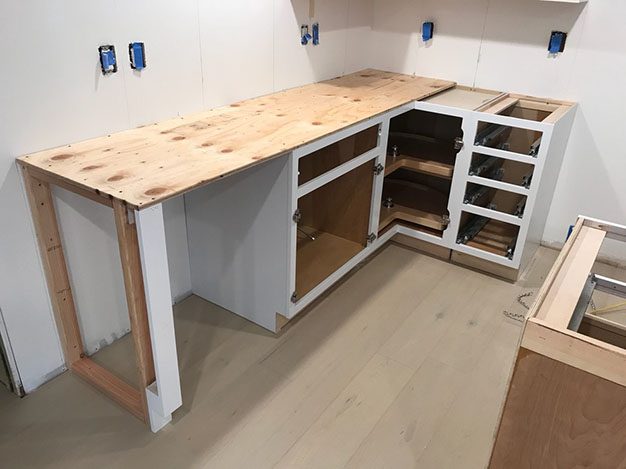
The most common solution is a sub-top to lift the new worktops up to the height of the old tile line. This is usually completed on site by our fitter. Alternatively, you can have your own joiner complete the work or do it yourself. If you would like our fitter to do this for you, there would be an additional charge and it will be noted on your quote if included.
The sub top is normally made from 6 to 8mm, moisture resistant MDF or ply wood and is set back from the worktop edge, in line with the units. Our granite & quartz worktops have a larger overhang of 20mm past the door front, compared to around 10mm on a standard formica or wood worktops. With this generous 20mm overhang the sub top isn’t easily seen due to its position, being set back 20mm from the edge.
Upstands / Splashbacks
Another option to get around the issue would be to add up-stands to hide the gap.
Up-stands are usually a strip of the same granite / quartz , made from 20mm thickness and 100mm in height. These strips are fitted to the worktops and would then cover any gaps left between the new worktops and the existing tiles. While a great option to get around the problem, there can be issues if there isn’t enough room for them to fit. As tiles are already fitted, this reduces the gap between the hob or tap and the wall, it may not be possible to install up-stands if there isn’t enough space.
Kitchen units or a mantle that sit on the worktops
If we are to remove the existing worktops for you, it’s important for us to know if you have anything that’s sat directly on the worktops, that would need to be removed before the old worktops can come out. To remove these, you would need to employ a joiner, kitchen fitter or complete the work yourself. Unfortunately, joinery work like this is not something undertaken by either our fitting teams or the plumbers/ removal of worktop team and isn’t included in your quote.
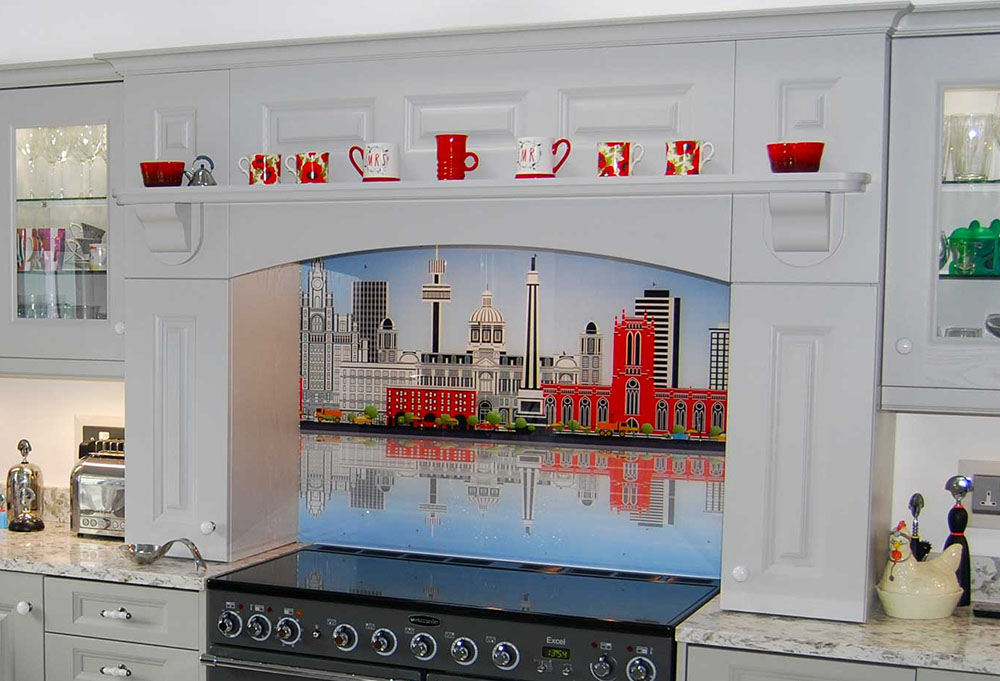
Usually its only one of two things that can cause this issue. The first is a display unit or kitchen unit fitted onto the worktops and the second would be a range mantle.
Display unit
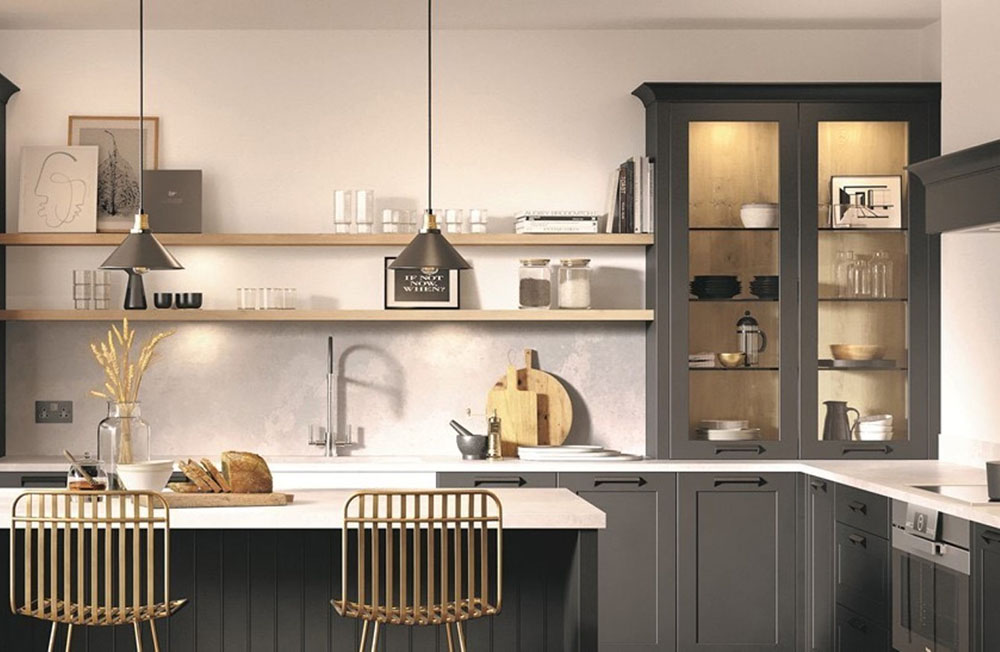
Usually glass fronted and longer than traditional wall units, these units are fastened to the walls on the higher level but are longer than a traditional wall unit and tend to sit on top of the worktop. Sometimes these units can be free standing so easily removed but in some cases , they are also fixed to other wall units that would run in line. If this is the case, they can be more difficult to remove as they could tie in with the pelmet that’s runs around the bottom of the units.
Range mantle
Range mantles can come in a verity or sizes and can be fixed in different ways. One way to fit them is to sit them directly on top of the worktops. If this is the case, this would need to be removed so we can remove the old worktops.
It is possible that the range mantle has been fixed to the floor units and the old worktops have been cut around it. Sometimes a range mantle may appear to be sat on the worktops but they have been fitted before the worktops were installed and a gap left to slide the worktop under. In this case the range mantle would still need to be removed as the gap may be 38 to 40mm and the new worktops are only 30mm . It may be possible to get around this issue with a sub-top as mentioned above . It would need to be assessed by the fitter . Usually the best way forward, to ensure a better fit and final outcome, is to remove the range mantle and re-fit it when the new worktops have been installed
Plumbing & removal of existing worktops
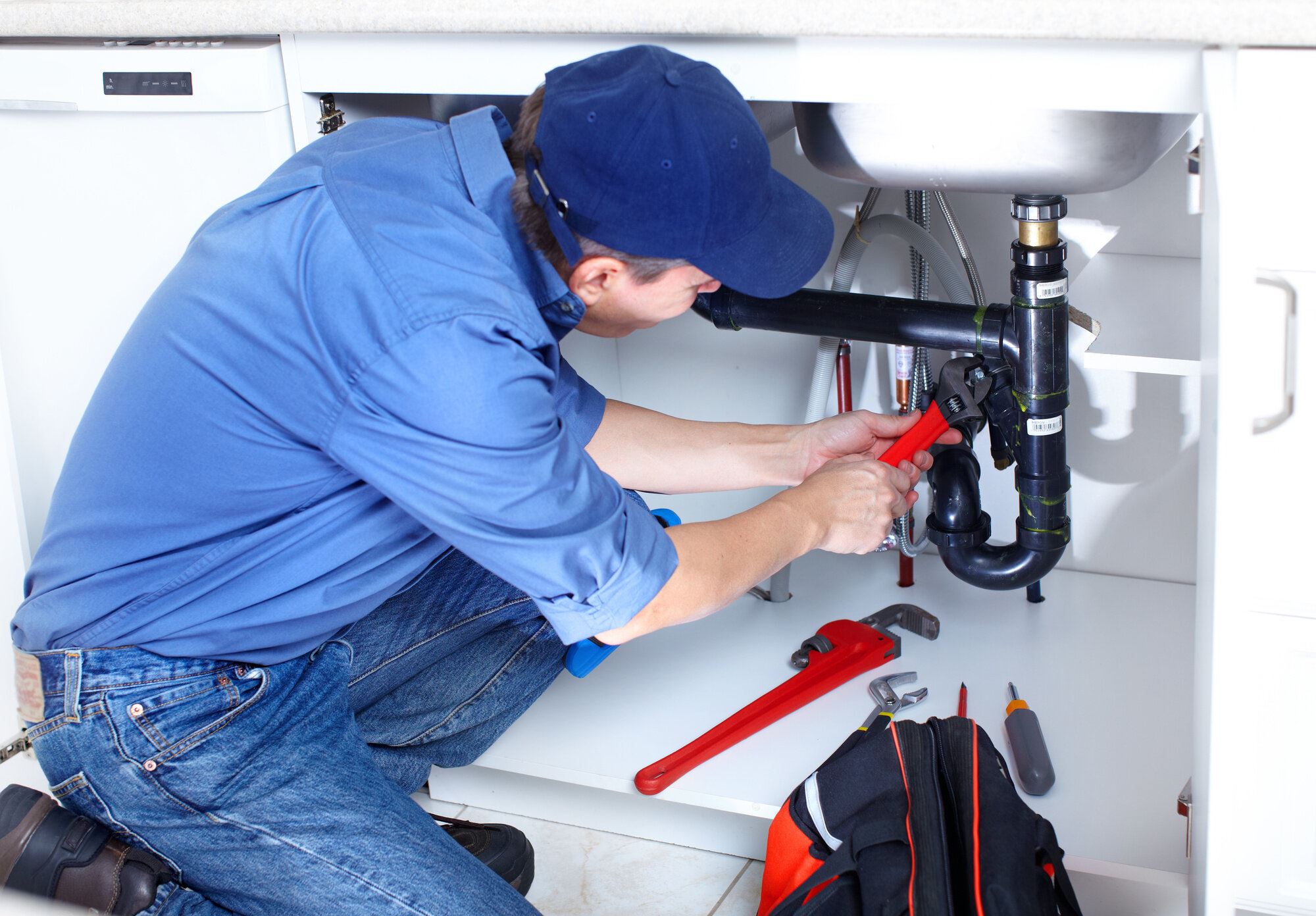
If required, your existing worktops can be removed before your new quartz, granite or porcelain worktops are fitted. This can also include the disconnection and re-connection of services such as the sink, tap and gas or electric hob.
We can provide details of a tradesperson who offers this service if required. You would contact them directly to confirm what work is needed for your project, agree the price, and arrange payment directly with them. The standard price is £400, although this may vary depending on the work involved and the requirements of your project.
You are also welcome to use your own tradesperson or arrange the removal, disconnection and re-connection work yourself if preferred.
Where this service is required, we will usually template the worktops before the installation date while your existing worktops, sink, tap and hob remain in place. This helps keep disruption to a minimum.
On the day of installation, the existing services and old worktops are usually disconnected and removed first. Our stone fitting team will then install your new worktops. Once the installation is complete, the sink, tap and hob can be re-connected.
This process is designed to keep the installation as straightforward and stress-free as possible, with minimal disruption to your kitchen.